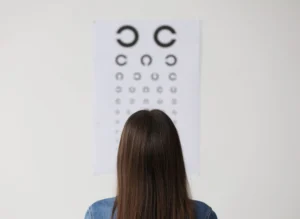
There’s a moment many cataract patients describe when they realise something has quietly changed. Headlights at night look like starbursts. Reading the menu at a restaurant feels harder than it used to. Colors seem a little washed out. These aren’t signs of normal ageing that you simply have to accept. They’re often the early signals that cataracts are progressing and that it may be time to have a real conversation with your eye doctor.
Knowing when to act is one of the most important things a patient can do for their long-term vision.
Understanding Cataracts and How They Affect Vision
The lens inside your eye is naturally clear. It focuses light onto the retina so you can see sharp, detailed images. As you age, proteins within the lens can begin to clump together, causing it to become cloudy. This clouding is a cataract.
Cataracts typically develop slowly, often over years. In the early stages, many people don’t notice any significant change. But as the cloudiness grows, it starts interfering with how light passes through the lens, leading to progressively blurred or distorted vision.
The tricky part is that cataracts don’t hurt. There’s no redness, no obvious warning sign that something is wrong. The vision changes can be gradual enough that patients adapt without realising how much clarity they’ve actually lost.
Key Signs That Indicate Cataract Surgery May Be Needed
Not every cataract requires immediate surgery. But certain signs suggest the condition has reached a point where surgery is worth seriously considering.
Difficulty seeing at night. If driving after dark has become stressful, or oncoming headlights seem unusually glaring, cataracts are likely interfering with your low-light vision.
Frequent prescription changes. If your glasses or contact lens prescription keeps changing but your vision still isn’t sharp, the lens itself may be the problem, not just the prescription.
Sensitivity to light and glare. Bright sunlight or indoor lighting that causes discomfort or halos is a common cataract complaint that tends to worsen over time.
Colors appear faded or yellowed. A cataract can alter how you perceive colour, making whites appear slightly yellow or dulling the vibrancy of everyday objects.
Double vision in one eye. When light bends unevenly through a clouded lens, it can create overlapping or ghost images even with one eye closed.
Difficulty with routine tasks. Reading, cooking, recognising faces, or following a ball in a sport becomes harder when your vision can no longer compensate for the cloudiness.
If you’re experiencing one or more of these, it doesn’t automatically mean surgery is scheduled tomorrow. But it does mean a proper evaluation is overdue.
When to Consider a Cataract Surgeon Consultation?
The general advice in ophthalmology is straightforward: when cataracts begin to interfere with your quality of life, that’s when surgery becomes a meaningful option.
A cataract surgeon consultation helps establish exactly where you are in the progression. Through detailed measurements and imaging, a cataract surgery specialist can assess the density of the cataract, its impact on your functional vision, and whether surgery is likely to restore meaningful clarity.
At RK Eye and Retina Center, consultations go beyond a basic vision check. The team evaluates how cataracts are affecting your day-to-day life, not just your chart readings. This holistic approach helps patients make informed decisions rather than feel rushed or uncertain.
Age alone is not the deciding factor. Some patients in their fifties need surgery sooner than others in their seventies, depending on the type and location of the cataract and how much it affects daily function.
Factors That Help Decide the Right Timing for Surgery
Timing is more nuanced than most patients expect. Several factors play into when surgery makes the most clinical sense.
Your daily activity level matters. Someone who drives frequently, works at a computer, or has professional demands on their vision may need to act sooner than someone with fewer visual requirements.
The type of cataract influences progression. Posterior subcapsular cataracts, for example, tend to advance more quickly and affect vision more dramatically than nuclear cataracts.
Overall eye health plays a role. Conditions like glaucoma, macular degeneration, or diabetic retinopathy can affect expected outcomes from surgery. A complete evaluation helps set realistic expectations.
Waiting too long has risks. A cataract that becomes very dense, what doctors call a mature or hypermature cataract, can make surgery technically more challenging and increase the risk of complications. Earlier intervention, when the cataract is still moderately advanced, typically leads to smoother surgical outcomes.
Choosing the Right Eye Care Provider
The decision to have cataract surgery is significant. Choosing where and with whom you have it is equally important.
An experienced eye hospital for cataract surgery offers more than just the procedure itself. It provides advanced preoperative diagnostics, a range of lens implant options, and structured aftercare to support your recovery. These details matter enormously for final visual outcomes.
RK Eye and Retina Center stands out as the best eye clinic in Indore for patients seeking comprehensive cataract care. The center offers a full spectrum of eye care services in Indore, from initial diagnosis through surgical treatment and follow-up, ensuring continuity of care at every step.
As a trusted RK Eye clinic in Indore, the center uses modern phacoemulsification techniques, which allow for small-incision surgery, faster healing, and minimal disruption to your routine. Patients also benefit from a detailed consultation process that helps them understand their lens options, including premium multifocal lenses that can reduce dependence on glasses after surgery.
The team at RK Eye and Retina Center takes time to understand each patient’s visual goals and lifestyle before making any surgical recommendation. That individualised approach is what sets a genuinely patient-focused practice apart from a high-volume procedure center.
Conclusion
Cataracts are a natural part of ageing for many people, but blurred vision, night driving difficulties, and glare sensitivity are not things you simply have to live with. When these symptoms start affecting your independence or enjoyment of daily life, it’s a clear signal that a proper evaluation is needed.
The right time for surgery is different for every patient, but one thing is consistent: waiting until vision deteriorates severely rarely works in your favour. An early consultation with RK Eye & Retina Center gives you the information you need to make that decision confidently and on your own terms.