If your eyes feel scratchy, tired, or irritated after spending hours in an air-conditioned office or car, you are not imagining it. Air conditioning is one of the most common and underappreciated triggers of dry eye symptoms, and it affects a large number of people across all age groups. Understanding exactly what happens to your eyes in a cooled environment is the first step toward protecting your vision and your comfort.
How Does Air Conditioning Cause Dry Eyes?
The human tear film is a delicate three-layer structure that keeps the eye surface moist, clear, and protected. It depends on a stable surrounding environment to function properly.
Air conditioning systems reduce humidity and circulate dry air continuously. When dry, fast-moving air passes over the eye surface, it dramatically speeds up tear evaporation. The tear film thins out faster than the eye can replenish it. This is the fundamental mechanism behind dry eyes from air conditioning.
Several factors make this worse:
- Low indoor humidity caused by air conditioning (often dropping below 30 per cent)
- Direct airflow from vents aimed at the face or eyes
- Prolonged screen use in air-conditioned spaces, which reduces blink rate
- Closed, recirculated air environments with little fresh air exchange
- Wearing contact lenses, which already reduce tear film stability
The result is a compromised ocular surface that becomes inflamed, uncomfortable, and increasingly sensitive over time.
Recognising the Symptoms of Dry Eye Disease
Dry eye is not just occasional eye dryness. When the condition is triggered or worsened by ongoing air conditioning exposure, it can become a persistent problem with a recognisable set of symptoms.
Common signs include:
- A gritty or sandy sensation in the eyes
- Burning or stinging, especially in air-conditioned rooms
- Redness and eye fatigue
- Blurred vision that comes and goes, often clearing after blinking
- Watery eyes (a reflex response to surface irritation)
- Difficulty wearing contact lenses comfortably
- Light sensitivity
Many people dismiss these symptoms as tiredness or screen strain. If they appear consistently in air-conditioned environments, dry eye is very likely the underlying cause.
Who Is at Higher Risk?
Not everyone responds to air-conditioned environments the same way. Certain groups are significantly more vulnerable to developing or worsening dry eye conditions.
Risk Factors to Be Aware Of
People over 40 naturally produce fewer tears, making age a key risk factor. Women are more susceptible due to hormonal changes during menopause or pregnancy. Office workers who spend six or more hours daily in front of screens in cooled rooms face compounded risk from both reduced blinking and dry air. Contact lens wearers, people on certain medications including antihistamines and antidepressants, and individuals with existing conditions such as diabetes or thyroid disorders are also at elevated risk.
In Indore, where summers are long and air conditioning runs for extended periods across homes, offices, and vehicles, dry eye presentations are particularly common during the warmer months.
How to Prevent Dry Eyes from Air Conditioning?
Fortunately, reducing the impact of air conditioning on your eyes is very manageable with a few consistent habits.
Adjust your environment:
- Redirect air conditioning vents so airflow does not blow directly toward your face
- Use a humidifier in your workspace to maintain humidity above 40 per cent
- Take regular breaks from air-conditioned rooms when possible
Protect your eyes directly:
- Follow the 20-20-20 rule: every 20 minutes, look at something 20 feet away for 20 seconds
- Blink consciously and fully, especially during screen use
- Use preservative-free lubricating eye drops as needed throughout the day
- Wear wraparound glasses outdoors to reduce evaporative loss from wind
Adjust screen habits:
- Position your screen slightly below eye level to reduce the exposed ocular surface area
- Reduce screen brightness and enable blue light filtering
These steps help considerably, but they are not a substitute for professional evaluation if symptoms are persistent or worsening.
Dry Eye Treatment in Indore: When to See a Specialist
Self-care measures manage mild symptoms, but moderate to severe dry eye disease requires proper clinical diagnosis and a structured treatment plan. If your symptoms have lasted more than a few weeks, are disrupting your daily routine, or are not improving with over-the-counter drops, it is time to consult an eye specialist.
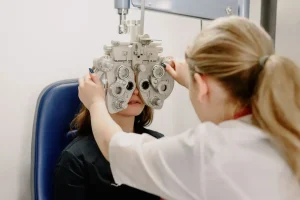
At RK Eye & Retina Center in Indore, the dedicated Dry Eye Clinic offers comprehensive evaluation using advanced diagnostic tools. The clinic assesses tear film quality, tear production volume, evaporation rate, and the health of the meibomian glands, which are responsible for the oily layer of the tear film.
Treatment Options Available
Treatment is matched to the underlying cause and severity of the condition. Options include:
- Preservative-free lubricating drops and gels
- Warm compresses and lid hygiene protocols for meibomian gland dysfunction
- Prescription anti-inflammatory eye drops
- Punctal plugs to reduce tear drainage and retain moisture
- Omega-3 supplementation for improved tear quality
- In office procedures for gland expression and treatment
Finding the right dry eye treatment in Indore starts with a proper diagnosis. Generic drops purchased without a prescription often provide temporary relief without addressing the root cause.
Why Choose RK Eye & Retina Center for Dry Eye Care?
RK Eye & Retina Center is a NABH pre-accredited super speciality eye hospital located in Indore, opposite M.Y. Hospital. The Dry Eye Clinic was established by Dr Trushaa Agrawal, a cornea and ocular surface specialist with advanced fellowship training from Narayana Nethralaya, Bangalore.
The clinic is among the first of its kind in Indore, specifically dedicated to diagnosing and managing dry eye conditions and ocular surface disease. Patients benefit from thorough evaluation, evidence-based treatment protocols, and follow-up support.
For anyone in Indore experiencing persistent eye discomfort in air-conditioned environments, RK Eye & Retina Center offers one of the most experienced and well-equipped teams available in Central India.
Conclusion
Air conditioning is a modern necessity, but its impact on eye health is real and often underestimated. Understanding that air conditioning causes dry eyes through increased tear evaporation is important for anyone who spends significant time in cooled environments.
Prevention habits help, but chronic or recurring symptoms deserve professional attention. As a trusted eye hospital in Indore, RK Eye & Retina Center provides the expertise and diagnostic capability to identify the exact cause of your dry eye condition and treat it properly rather than just temporarily relieving symptoms.