- info@rkeyecenter.com
- Call Us +91-7024154321 | +91-7312705058

Glaucoma Treatment in Indore: Testing, Monitoring and Vision Protection
Glaucoma can damage the optic nerve gradually, and early disease often causes no noticeable symptoms. That is why a normal day-to-day feeling in the eyes does not rule glaucoma out. At R.K. Eye & Retina Centre, Indore, glaucoma care focuses on identifying risk, documenting the optic nerve and visual field, lowering eye pressure when treatment is needed, and monitoring change over time.
- Eye pressure is important, but pressure alone does not diagnose or exclude glaucoma.
- Baseline optic-nerve and visual-field testing helps the doctor monitor progression.
- Treatment may involve eye drops, laser, surgery or a combination depending on the type and stage.
- Existing vision loss from glaucoma is usually not reversible, so follow-up and adherence matter.
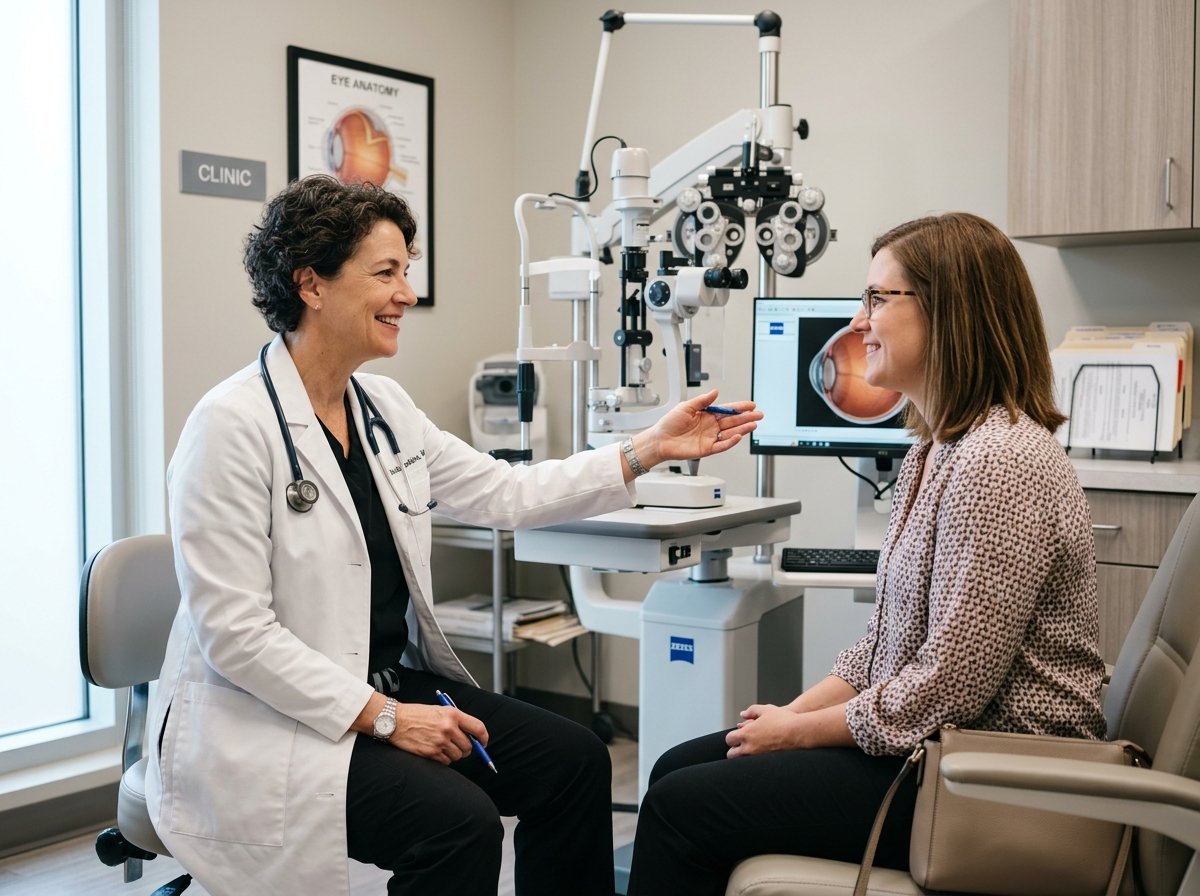
What is glaucoma?
Glaucoma is a group of eye diseases that damage the optic nerve, which carries visual information from the eye to the brain. The most common forms can progress slowly, often without pain or obvious early symptoms.
Many people with glaucoma have raised intraocular pressure, but glaucoma can also occur when measured pressure is within a statistically normal range. Conversely, some people have raised eye pressure without having glaucoma. This is why a proper evaluation considers the optic nerve, visual field, cornea, eye angle and other risk factors together.
Glaucoma diagnosis centres on comprehensive optic-nerve assessment and functional visual field tracking — not an isolated eye-pressure number alone.

Who should discuss glaucoma testing with an eye doctor?
Because early glaucoma rarely gives an obvious warning sensation, baseline screening is especially important if you fall into any of these risk categories:
Family History
People with a parent, sibling or child diagnosed with glaucoma, as genetic factors increase individual risk.
Raised Eye Pressure
Adults with elevated intraocular pressure readings or a previous “glaucoma suspect” evaluation report.
Steroid Medication Use
People using steroid eye drops, skin creams, inhalers or systemic steroids for a prolonged medical duration.
High Myopia / Eye Conditions
Patients with high minus numbers (severe short-sightedness), thin corneas or specific ocular vascular conditions.
Previous Eye Trauma / Surgery
Individuals who have experienced past eye injuries, severe internal inflammation (uveitis) or prior eye surgeries.
Advised Routine Monitoring
Anyone previously advised by an eye specialist to monitor their optic cup, visual field or intraocular pressure over time.
Symptoms: why glaucoma can be missed
Open-angle glaucoma often develops without obvious symptoms in its early stages. Peripheral (side) vision can gradually reduce as damage progresses, while central vision may remain sharp until later phases. This is why waiting for symptoms is not a reliable screening strategy.
Angle-closure glaucoma is different. It can present suddenly with severe ocular pain, a visibly red eye, blurred vision, rainbow-like halos around lights, intense headache, nausea and vomiting. Sudden symptoms represent a medical emergency needing prompt attention rather than a routine scheduled appointment.
How glaucoma is evaluated at an eye clinic
A glaucoma work-up combines examination and diagnostic tests. The exact set of tests depends on the patient, previous results and the type of glaucoma being considered.

Glaucoma treatment options
The aim of glaucoma treatment is to reduce the risk of further optic-nerve damage. The target eye pressure and treatment plan are individualised according to the type of glaucoma, level of existing damage, rate of progression, age, other eye conditions and the patient’s ability to use treatment consistently.
Prescription Eye Drops
Medications that lower intraocular pressure by decreasing fluid production or increasing outflow through natural drainage channels. Consistent daily adherence is vital.
Laser Procedures
In selected forms of glaucoma, options include laser trabeculoplasty to improve natural drainage or laser peripheral iridotomy (LPI) for angle-closure situations.
Glaucoma Surgery
Surgical procedures (such as trabeculectomy or glaucoma drainage devices) considered when eye drops and laser do not adequately control target pressure.
Combined Cataract & Glaucoma Care
Tailored surgical coordination for patients with both cloudy lens (cataract) and raised pressure, planned safely in a single session when clinically indicated.
Why regular monitoring matters even when pressure looks controlled
Glaucoma management is not only about reaching one pressure number. A pressure that is acceptable for one eye may be too high for another. The doctor compares optic-nerve appearance, OCT scans and visual-field results over time and adjusts treatment if there is evidence of progression.
Patients should use prescribed drops consistently and discuss side effects or practical difficulties rather than stopping treatment on their own. Follow-up frequency depends on the glaucoma type, severity and stability.
The 4-Step Continuity Cycle
Baseline Testing
Comprehensive pressure, OCT, pachymetry and visual field documentation.
Scheduled Follow-Up
Regular pressure checks and adherence review tailored to individual risk.
Serial Comparison
Overlaying current OCT/visual field maps with past records to detect subtle shifts.
Adjust Plan
Calibrating drops, lasers or surgical solutions if progression is identified.
If glaucoma runs in your family
Family history can significantly increase glaucoma risk. If a parent, sibling or child has glaucoma, tell your eye doctor and ask when a comprehensive eye examination is appropriate for you.
Because vision loss occurs gradually and painlessly from the edges inward, family members should not wait for symptoms before getting checked. A single baseline evaluation can protect years of visual independence.
Why patients choose RK Eye for glaucoma care
Optic-Nerve Centered
Glaucoma evaluation based on optic-nerve health and visual function, not an isolated pressure number alone.
Advanced Diagnostics
Access to visual-field testing (perimetry), OCT and corneal pachymetry measurements when clinically indicated.
Longitudinal Tracking
Structured long-term records so current results can be accurately compared with prior diagnostic tests.
Individualized Solutions
Treatment discussions covering medicines, laser and surgical options without assuming every patient needs the same pathway.
Integrated Specialists
Ability to coordinate cataract, retina and other specialized eye care when glaucoma co-exists with another condition.
Treatment suitability, procedure choice and expected outcome depend on clinical evaluation. Results vary from patient to patient. This page is for awareness and appointment guidance and does not replace medical consultation.
Book Glaucoma Evaluation
Share your details, previous reports or symptoms for appointment coordination with our clinical team.
Request Received
Thank you! Our team at RK Eye & Retina Center will contact you shortly to schedule your consultation.
RK Eye & Retina Center • Jaora Compound, opposite M.Y. Hospital, Indore
Book an appointment online
Frequently Asked Questions
Can glaucoma be cured?
Glaucoma damage that has already occurred is generally not reversible. Treatment aims to lower the risk of further damage and preserve remaining vision. Ongoing monitoring is often needed.
If my eye pressure is normal, can I still have glaucoma?
Yes. Some people develop optic-nerve damage despite pressure readings that fall within a statistically normal range. Diagnosis depends on the complete clinical picture, not pressure alone.
Does high eye pressure always mean glaucoma?
No. Some people have ocular hypertension without detectable glaucoma damage. They may still need monitoring or treatment depending on their risk profile.
Will I need eye drops for life?
Some patients use long-term eye drops, while others may be candidates for laser or surgery. The plan depends on the type of glaucoma, target pressure, disease stability, side effects and other clinical factors.
How often should glaucoma tests be repeated?
There is no single schedule for everyone. The ophthalmologist decides follow-up intervals based on the amount of damage, treatment, risk of progression and stability of pressure, OCT and visual-field results.
Can cataract and glaucoma be treated together?
In selected patients, cataract and glaucoma planning can be coordinated or combined. Whether this is appropriate depends on the cataract, glaucoma type, pressure control and surgical goals.
What symptoms need urgent attention?
Severe eye pain, a red eye, sudden blurred vision, halos with headache, nausea or vomiting require urgent assessment because acute angle closure and other eye emergencies need prompt treatment.
Related services
If you have a glaucoma diagnosis, raised eye pressure, a glaucoma-suspect report or a family history of glaucoma, bring your previous prescriptions, OCTs and visual-field tests if available. A comparison with older results can be as important as the current examination.
This page is for awareness and appointment guidance. Diagnosis, target pressure and treatment choice require an in-person ophthalmic evaluation.