“When will I be able to see clearly again?” It is one of the first questions patients ask right after retina surgery, and it is a completely fair one. Blurry or unclear vision in the days following the procedure can feel unsettling, especially when clear sight is exactly what the surgery was meant to restore.
The truth is, vision typically starts to return gradually and, in some cases, it may take a while. For most people, it will start to get better in a few days or weeks, but there are those who may require months to fully recover their vision. This depends on several things, including the type of eye condition, the surgery performed, and how the body responded to it. The blog below will provide an overview of the common progression most people may expect to experience after retina surgery, possible influencing factors, and when to contact an eye specialist.
Understanding Why Vision Recovery Takes Time After Retina Surgery
The retina is a thin layer of tissue located at the back of the eye and responsible for transforming light stimuli into signals perceived as images by the brain. Following surgery, the retina has to go through a period of adjustment to reconnect firmly and heal on the cellular level. This is not an immediate process, and it will take time for the retina to go through all these stages.
In many surgeries, gas or silicone oil may be present within the eyeball to maintain the position of the retina during the healing period. These substances cause temporary distortion and blurriness of vision until they are absorbed. Moreover, normal post-surgical inflammation prevents patients from appreciating immediate recovery.
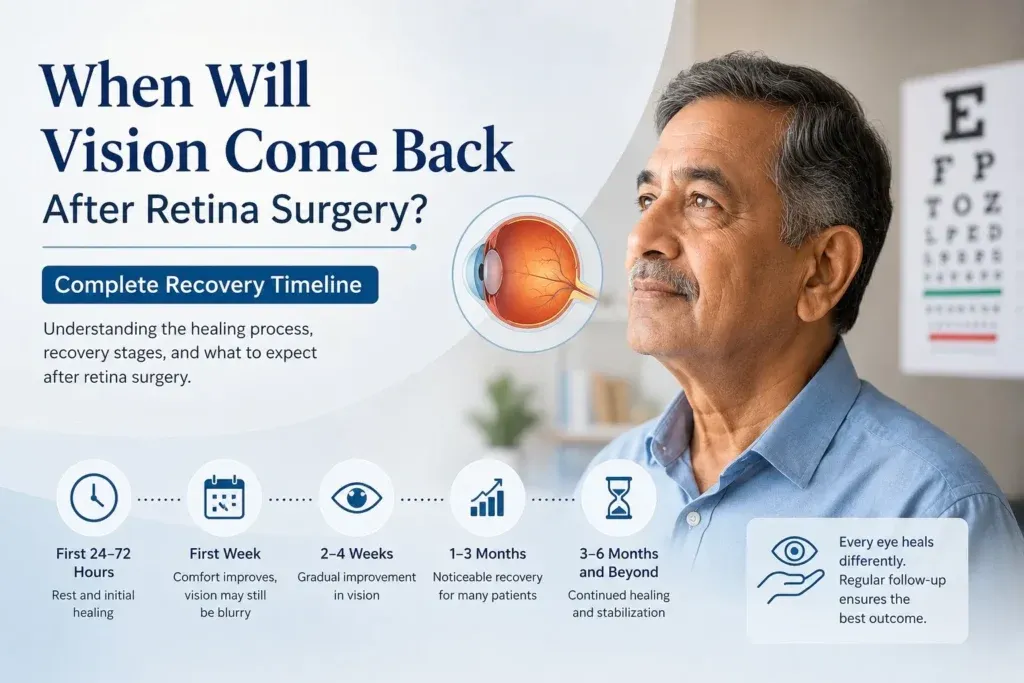
Vision Recovery Timeline After Retina Surgery
Every patient heals differently, so the following stages should be viewed as general patterns rather than guaranteed outcomes.
First 24 to 72 hours: Vision is typically blurry, hazy, or dark. Some discomfort, light sensitivity, and mild redness are common during this early healing window.
First week: Blurriness often begins to ease slightly. If a gas bubble was used, it may still block part of the visual field, which is expected.
2 to 4 weeks: Many patients notice steadier, more consistent improvement as inflammation reduces and the retina continues to stabilize.
1 to 3 months: Vision often becomes noticeably clearer during this stretch, particularly once any gas bubble has fully absorbed.
3 to 6 months and beyond: For more complex cases, especially those involving the macula, full visual recovery can continue gradually over several months.
These stages are meant to give a general sense of what to expect, not a fixed promise. Two people with similar surgeries can heal at very different paces.
What Affects How Quickly Vision Returns?
Several factors influence how soon and how fully vision recovers after retina surgery:
- Type of retinal condition – a small localized tear behaves differently than a widespread retinal detachment.
- Severity and duration of damage – retinas that were detached for a longer period before surgery often take longer to recover function.
- Type of retina surgery performed – vitrectomy, scleral buckle, and pneumatic retinopexy each have different recovery patterns.
- Use of a gas or silicone oil bubble – these affect vision temporarily and require positioning instructions during recovery.
- Macular involvement – when the macula, the part of the retina responsible for sharp central vision, is affected, recovery tends to be slower.
- Following post-operative instructions – proper positioning, medication use, and rest genuinely influence healing.
- Overall eye health – conditions like diabetes or prior eye disease can affect the pace of recovery.
Retina Surgery in Indore – When Should You Be Concerned About Slow Vision Recovery?
For patients undergoing retina surgery in Indore or anywhere else, some degree of slow, gradual improvement is normal. However, certain symptoms should never be ignored:
- Sudden worsening of vision rather than gradual improvement
- Severe or increasing eye pain
- Growing redness that does not settle
- A sudden increase in flashes or floaters
- Curtain-like shadows appearing in your field of vision
- Persistent nausea or vomiting after surgery
If any of these occur, it is important to contact your retina specialist promptly rather than waiting for a scheduled follow-up.
Recovery Tips From a Retina Specialist
Good aftercare plays a real role in how smoothly recovery progresses. Some general guidance includes maintaining prescribed head positioning if advised, avoiding heavy lifting or strenuous activity, using prescribed eye drops consistently, protecting the eye from direct impact, and attending every scheduled follow-up visit so healing can be monitored closely.
Pro Tip
Keep a simple daily note of how your vision feels: sharper, hazier, or unchanged. This small habit gives your doctor useful, real-world detail during follow-up visits and helps track subtle changes over time.
Choosing a Retina Surgery Specialist Hospital in Indore
Retina surgery requires a special approach, with prognosis depending on the accuracy of the diagnosis, the quality of the intervention, and the rehabilitation process. Therefore, when choosing the best retina surgery specialist hospital in Indore, one should pay attention to the range of diagnostic equipment, the quality of communication of one’s case, and the personal approach concerning treatment.
RK Eye & Retina Center uses a patient-oriented strategy to involve one in the diagnosis, surgery, and rehabilitation processes. Hence, for someone looking for the best retina surgery in Indore, communicating all the details concerning their condition and expecting individualized treatment options at each stage is vital.
Furthermore, the most reliable vision care center in Indore will offer an opportunity to ask questions regarding one’s recovery after retina surgery. In this way, one should understand that support and communication are essential for a speedy recovery. Additionally, being able to ask questions at any time helps to increase confidence in the chosen method of treatment.
Key Takeaways
- Vision recovery after retina surgery is typically gradual, not immediate.
- Early blurriness, especially with a gas bubble in place, is normal.
- Noticeable improvement often continues over weeks to months, depending on the case.
- Macular involvement and the severity of the original damage can extend recovery time.
- Sudden vision worsening, severe pain, or new flashes and floaters warrant prompt medical attention.
- Following post-operative instructions closely supports better healing outcomes.